

Mid-Year Retreats
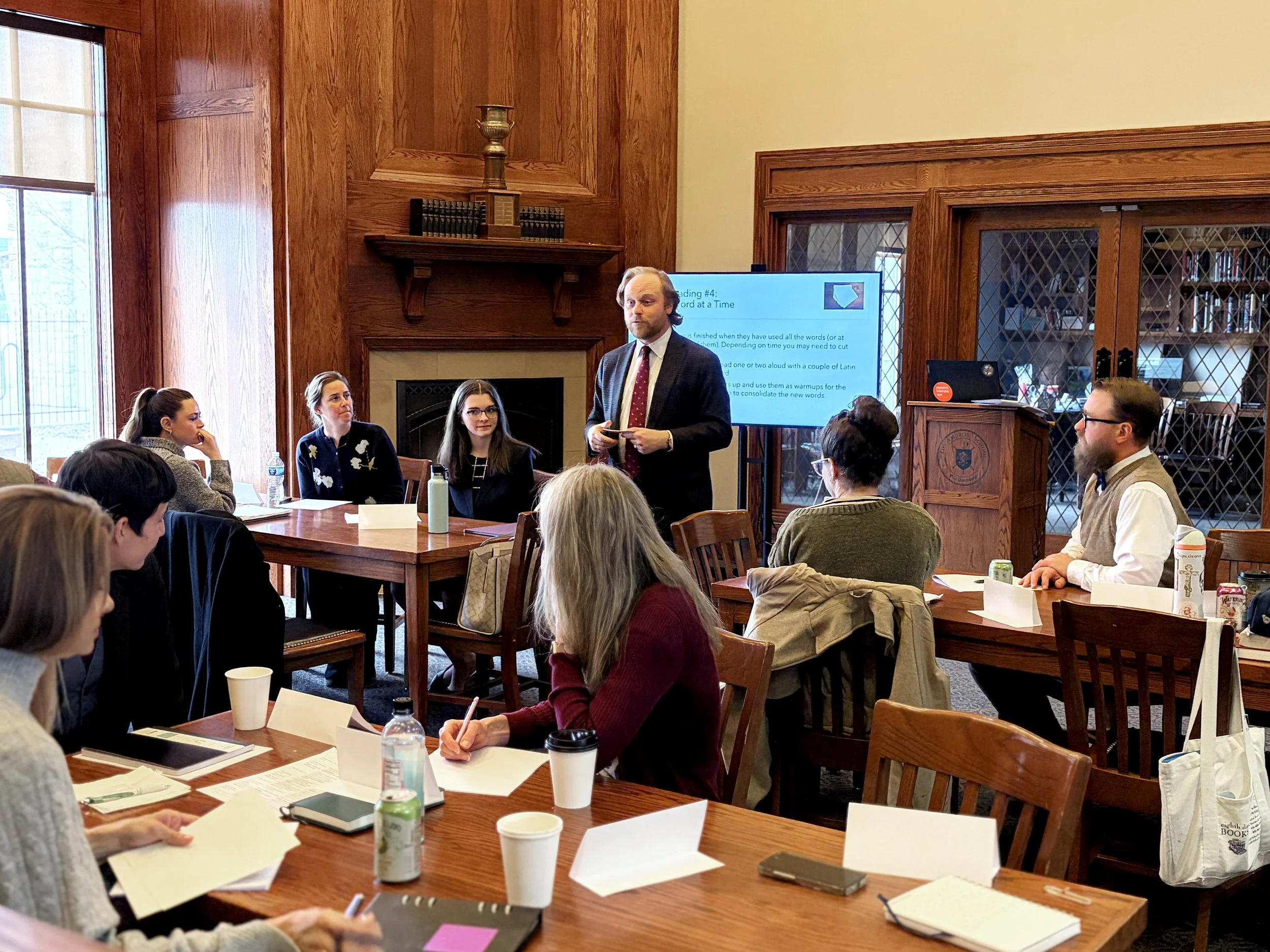
The sort of training offered at The Classical Teaching Institute’s Mid-Year Retreats is unlike the training you’ll find at a large conference or an in-service event. The goal of a Retreat is to place teachers in the role of students, allowing them to experience the same lessons that they can offer their own students upon return.
An additional benefit of a Retreat is that they are kept very small: attendees share their meals together, spend their evenings together, and have personal access to the instructors. Unlike a big summer conference, every session revolves around your craft, and the instruction is given by someone who has been doing the same work you have—someone who understands your trials, your difficulties, your ambitions.
Come join us in Boise, ID, for a unique experience that you won’t forget!
FALL RETREAT
November 13-14, 2026

Teaching Literature Classically:
Pinocchio by Carlo Collodi
Taught by Joshua Gibbs
What is real? There has never been a time in human history when the difference between real and fake has been harder to distinguish than our own. We are surrounded by fake images, fake stories, fake bodies, fake love, fake lives... Our society has become so inundated with fakes that we aren’t merely losing the ability to discern what is real, we are losing the ability to care about reality.
Carlo Collodi’s Pinocchio is a story about the highest and grandest pursuit of the real. The story has been adapted, told, and retold many times by Hollywood filmmakers over the last century, but the original novel is another thing altogether: It is sermonic without being preachy, moving without being sentimental. It’s a difficult story to read because the hero fails over and over and over again in painful and mortifying ways. But it’s also a beautiful story with a stunning denouement.
Pinocchio is the sort of story that makes you eager to discuss everything you’ve just read. On November 13-14, come to The Ambrose School and spend time with other classical educators in conversation over Collodi’s classic fantasy novel. Afterward, you’ll be personally edified by a well-told tale and ready to lead a discussion with your own students.
Fall Retreat Schedule
November 12 | Optional reception at 7:00 pm
November 13 | Sessions from 8:00 am to 3:00 pm at The Ambrose School (including lunch together), with a group dinner at 6:00 pm
November 14 | Sessions from 9:00 am to 12:00 pm
WINTER RETREAT
January 15-16, 2027
Two Options: Science & Music

Teaching Science Classically
Taught by Ken Hosier
How do you teach science classically?
This might be the most vexing academic question presently facing classical educators. Teaching science like a Christian seems relatively straight forward, but how do you teach science in a classical Christian manner? Does it mean passing out copies of famous works by Newton and Galileo? Does it mean arguing against the mechanistic premises of the textbook? How do you teach chemistry in a way that is harmonious with the goals of a humanities class?
This winter, join veteran science teacher Ken Hosier to answer some of these questions through lessons, workshops, and lab demos that lay out a path forward for classical Christian science teachers.
-
What does a "classical" science lesson entail? A look into the critical elements and flow of a 50-minute classical science lesson.
-
Using demos, case studies, and current science headlines to foster the development of hypotheses, critical analysis, and application of knowledge.
-
An in-depth look at how to use the works of various scientists in the classroom, including how to use a central text to build your foundation on.
-
A discussion on how to best use the short time allotted to run a lab. We will look at the role of recipe labs, the master-apprentice model for laboratory work, and "classical" lab work. Independent lab work will also be discussed.
-
Science is more than a body of knowledge: it's a tool we use to peel back the layers of God's Creation. For this section we will discuss how to use questions and prompts to guide students to higher level thinking and application. We will also discuss why assessments need to focus on application rather than regurgitation.
-
Bring any questions you have about classical science, running a lab, dealing with tight budgets, or why I think the Dodgers will three-peat.
Teaching Music Classically
Taught by Kent Young
How can music teachers offer instruction to their students in a way which is harmonious with the ideals and principles of classical education?
This winter, veteran music instructor Kent Young is offering a two-day Retreat that has been specifically curated for music teachers at classical schools. Over the course of two days, Kent will present a series of lessons, workshops, and demonstrations that draw from a life spent in the classical music classroom—and can immediately be taken home and applied in yours.
-
Using language as our metaphor for understanding the art of music, we will gain a bird’s eye view of the materials and pedagogy of a K-12 music program. We will lay the groundwork for our pedagogy by discussing the biblical and human foundations for music literacy and what to expect each level of student to be capable of before moving on to the next level. We will then explore the primary pedagogical principles of each level of skills acquisition and some of the primary pedagogical tools used as a result. This lesson will focus our attention for the work we will do in the upcoming workshops.
-
In this workshop participants will toggle between acting in the capacity of grammar students and music teachers. We will begin by analyzing two folk songs together to discover their best pedagogical uses for teaching rhythms and pitches. We will first learn the song by rote to get ideas for teaching new songs to grammar students. We will then look at the sheet music together. Once we have analyzed the song, we will work through the process of teaching a new concept from the music and then practicing the new concept (preparation, making conscious, and practice). Once we have workshopped a new concept together participants will have the opportunity to teach a mini-lesson on the other song either on the preparation, making conscious, or practice portion.
-
This lesson will focus on various ways to prepare a concept through games, movement, and questions, and how to make the students conscious of a musical element (naming it and introducing its symbols). We will begin with a discussion of the pedagogy generally, looking at the means by which students become aware of the isolated elements of sound. Participants will receive tools to use in order to help their students navigate the topography of songs. During this portion of the lesson we will learn two new songs to analyze and use for “preparation/make conscious.” The last portion of this lesson will be a workshop wherein participants will have the opportunity to teach a mini-lesson either preparing a musical concept or making students conscious of it. We will give constructive feedback after each lesson praising what was done well and giving suggestions for improvement.
-
In the “practice” lesson we will have the opportunity to explore upper school music classes in greater depth. We will discuss the types of practice (reading a new song, aural skills, improvisation, part work), and work through a simple practice lesson and a more difficult one. We will discuss the skills required for musicianship and the paths to gain them. We will also take a piece of choral music and begin learning it by way of musicianship exercises derived from the score. In this lesson, participants will gain some ideas on how to apply grammar skills to secondary classes, and how to keep performance groups improving their musicianship through their performance music.
-
In order to help facilitate ideas for how to draw musical elements into a cohesive system in the minds of our students this lesson will begin with laying out key signatures using a keyboard as our object and draw on the knowledge of intervals that Junior High students ought to possess after a solid grammar school music program. We will discuss what questions will facilitate their understanding and what objects we can use (either pictures or songs) to help them to gain an understanding of key signatures. We will then use this object lesson to expand ideas into teaching basic harmony, counterpoint, and voice leading. We will apply some of what we learn to analyse a piece of choral music in order to discover what we can learn about music theory in the process of preparing the song for performance.
-
Our final time together will be a question and answer round table based on what we have done thus far, and ranging to general concerns as they apply to Classical Christian music programs, and the classroom specifically. We may switch between discussion and practical demonstration wherein either the instructor or a participant will play the role of the teacher for a time in order to gauge understanding or display the subtlety of a particular technique.
Winter Retreat Schedule
January 14 | Optional reception at 7:00 pm
January 15 | Sessions from 8:00 am to 3:00 pm at The Ambrose School (including lunch together), with a group dinner at 6:00 pm
January 16 | Sessions from 9:00 am to 12:00 pm
About the Retreats
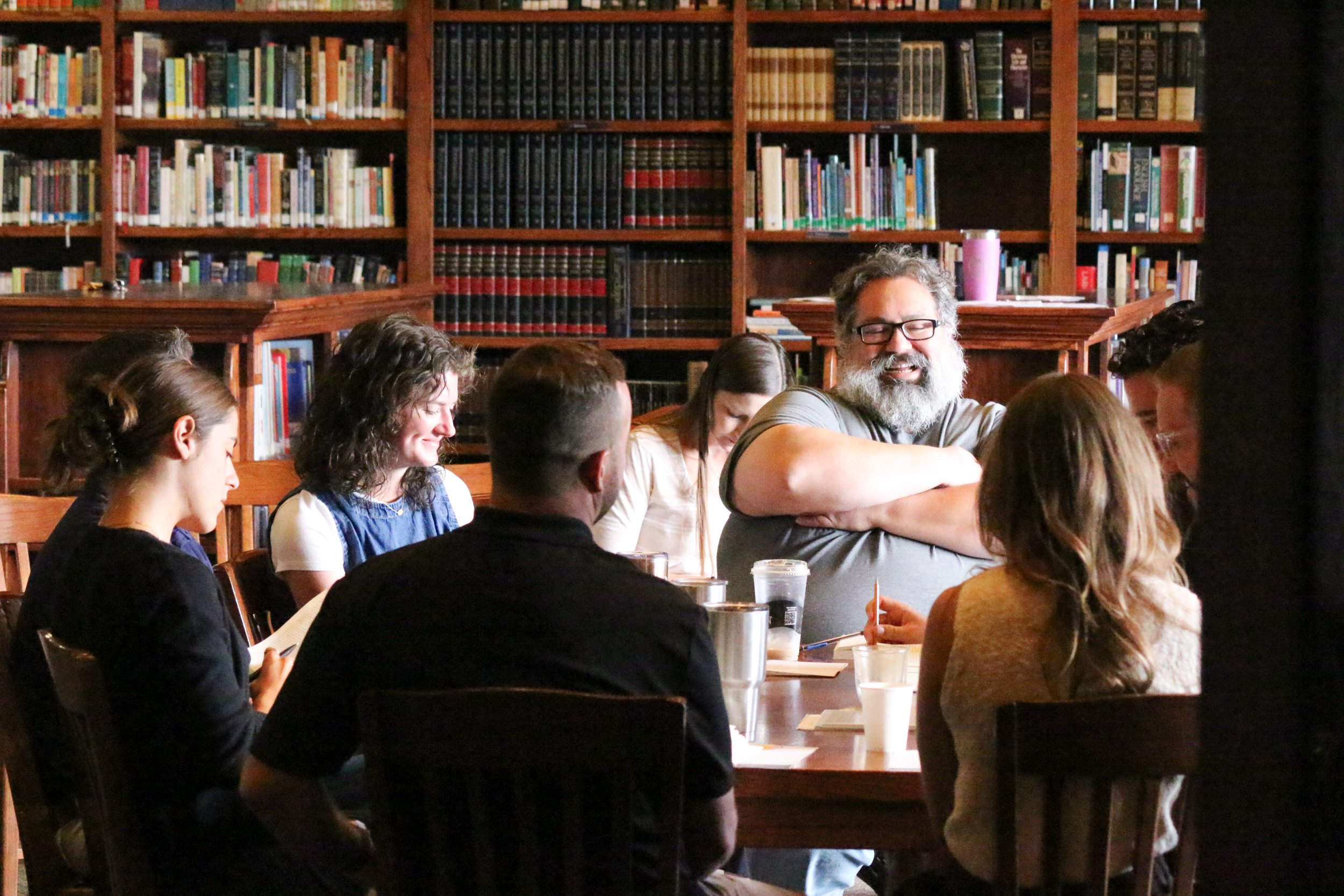
The Classical Teaching Institute offers mid-year retreats on the campus of The Ambrose School in Meridian, ID. Using a “show, don’t tell” model, each retreat is an intensive mini-course in which attendees are led through a classic text (literature & philosophy) or a single subject (science & mathematics) using readings, lectures, questions, discussions, exercises, and assignments that have been tested and tried for many years in a classical classroom. Retreats are designed for teachers who are looking for a short burst of observations, ideas, and encouragement that they can take back to their classroom and apply during the current school year.
Because of their length, retreats are focused on a single subject or book.
General Information
-
$450 - multi-teacher discounts available!
Lodging and transportation are additional and are the responsibility of the attendee (see recommendations below). If the cost of a hotel is an impediment to your attendance, we have limited lodging available through local host families. Please indicate your interest in host family lodging on the Registration Form.
-
Retreats are held on the campus of The Ambrose School in Meridian, ID. The nearest airport is the Boise Airport (BOI), which is located about 25 minutes away from the school.
-
Retreat participants are welcome to select their own lodging, but you may find the following list helpful:
SpringHill Suites - Boise West / Eagle
• 2.2 miles from The Ambrose School (closest hotel)
• Provides breakfast
• Free parkingMy Place Hotel - Boise / Meridian
• 3.9 miles from The Ambrose School
• Least expensive local option
• Low cost breakfast
• Free parkingHomewood Suites - Eagle Boise
• 3.5 miles from The Ambrose School
• Provides breakfast
• Free parkingPlease note that there are no hotels within walking distance of The Ambrose School, but we help arrange carpools between attendees when possible. An Uber or taxi ride to the airport is around $25.
We understand that the cost of lodging may be a significant concern, and we have several local families who are willing to host visiting teachers during a retreat. If you are interested in staying with host family, please indicate this on your Registration Form.
-
Attendees should plan to arrive in Meridian on Thursday and depart at noon on Saturday. The daily schedule for all retreats is:
Thursday (evening)
Arrive in Boise
7:00 - 10:00 PM | Optional Reception
Friday (all day)
Breakfast at hotel
8:00 AM - 3:30 PM | Teaching sessions at The Ambrose School (schedule includes breaks and lunch, which is provided)
3:30 - 6:00 PM | Break
6:00 - 9:00 PM | Dinner as a group
Saturday
Breakfast at hotel
9:00 AM - noon | Teaching & discussion sessions at The Ambrose School
Noon | Retreat concludes
-
For each retreat, The Classical Teaching Institute will provide:
Reception (drinks and light hors d’oeuvres) on Thursday evening
Coffee, Lunch, and Dinner on Friday (unless the attendee prefers to eat out)
Coffee on Saturday
FAQs
-
The Literature retreat is designed to be applicable for teachers or homeschoolers who:
Teach classic literature to high school students.
Teach philosophy, theology, or history to students using classic texts.
Teach elementary school but would like to become high school teachers.
Teach college but would like to become high school teachers.
-
General familiarity with the book is helpful, but it does not need to be read in entirety in advance - attendees are welcome to experience the work being taught in the same manner as a typical student.
-
Notes from Joshua Gibbs:
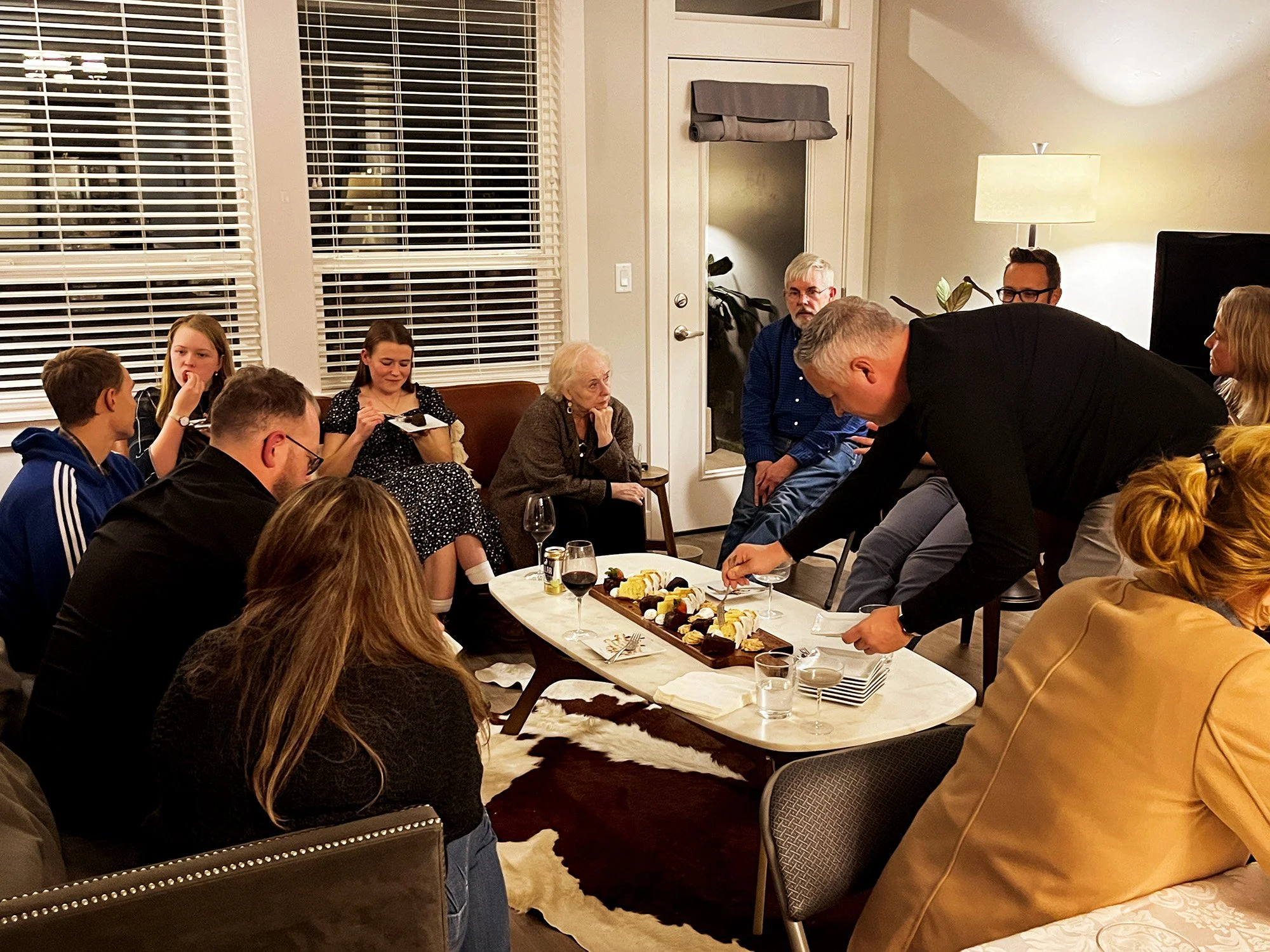
On Thursday evening, attendees are invited to the Gibbs home for a reception and orientation. This is the time to share a glass of wine, meet fellow attendees, tell others where you’re from and what you teach. The reception is really an open house, so you can drop by any time before ten and stay for as long as you like.
On Friday morning, attendees will gather on The Ambrose School campus at 8:00 am and class will begin. When I say “class will begin,” that’s exactly what I mean! A day of school, six classes in all, with an hour for lunch and five-minute breaks between each period.
All six classes in a literature retreat revolve around just one book. In each of these classes, my goal is to let attendees see many different strategies for teaching that book. Teaching a work like Paradise Lost well requires a great many tools. A well-prepared teacher knows when to lecture and when to lead a discussion—but also when to assess, when to provoke, when to open the floor for questions, when to answer questions that students are struggling with, when to suggest a hypothetical situation and give students a few minutes to play around in it, when to encourage or exhort, and so on.
What’s more, knowing “how to lecture” means knowing when to give a sixty-second lecture, a three-minute lecture, a five-minute lecture, a twenty-minute lecture, and when to drop everything and tell a long story born of personal experience. Some of this can be planned, but much of it is determined on the fly by the shifting moods and interests of the students, their abilities, their weaknesses, and their ability to both understand and accept difficult truths. Over the course of the six class periods we have together, I want to show you how and when to do as many of these things as possible.
While it’s not necessary for attendees to read every word of the retreat book, it’s helpful if they’re well acquainted with it. I will be reading a number of important passages from our text out loud (and I encourage teachers to read as much of a book out loud as possible to their own students), but we won't have enough time to read the entire book at the retreat. By the end of the day, however, attendees will understand what it means to slowly read and discuss a classic text. They will have received a model for taking up a classic, picking up where the class finished yesterday, and reading out loud until something significant occurs—something which demands an explanation, a conversation, a diatribe, a writing exercise, and so forth.
Students are encouraged to ask questions about the text on Friday but to save questions about method, theory, and practice until Saturday.
On Friday afternoon, class will dismiss at 3:30 pm and attendees will have several hours to themselves before dinner. At 6:00 pm, a dinner will be held at the Gibbs home for all who want to attend (anyone who would prefer to go out to eat with a few fellow attendees is welcome to do so).
On Saturday morning, the half-day session will begin at 9:00 am and go until noon. During this time, attendees are invited to ask questions about everything they saw and heard on the previous day, including how to incorporate what you saw and heard into your own classes.