
Great Lectures Aren’t Common, But Neither Are Great Discussions
by Joshua Gibbs
There’s a tendency among educators to define lecture as “a boring lecture,” and to define discussion as “an interesting discussion.” In my experience, dull conversations are about as common as dull lectures.
Ever since Alison King popularized the dichotomy between “the sage on the stage” and “the guide on the side” in 1993, the academic community has come to characterize lectures as inert, patriarchal “transmissions” of knowledge, and to characterize discussions as lively, engaging ways to “construct” knowledge.
While King’s article “From Sage on the Stage to Guide on the Side” was published in a journal called College Teaching, her distinction between the two models of the classroom has trickled down into every grade and aspect of education. Today, educators seem loathe to admit that a discussion can be pointless, stupid, or counterproductive. A discussion need not reach any conclusions or create any breakthroughs in order to be “good.” Why? Because the form of the discussion itself is sacred. It is democratic, egalitarian, and comports with secular ideals of fairness. By comparison, the lecture is hierarchical, tyrannical, and quite literally dictatorial.
Before defending the lecture, though, I should first readily admit that most lectures are, in fact, quite boring. I also happen to believe that most movies are quite boring, as is most pop music, most contemporary fiction, and most cab sauvs from California. That doesn’t mean I think people should quit making movies and writing novels, though. What's more, the fact that most contemporary fiction is dull proves absolutely nothing about contemporary memoirs, just as the general dullness of the lecture proves nothing good about the class discussion.
Nonetheless, those who disparage the form of the lecture typically define their terms in overly convenient ways. In their article, “A philosophical defence for the traditional lecture” in Times Higher Education, Amanda Fulford and Aine Mahon suggest that haters tend to assume the lecture is “a unidirectional mode of transmission – a monologic form of communication in which students are merely passive recipients.” In other words, in a lecture, someone stands at the front of the room and talks at you for forty minutes.
However, the assumption that a lecture necessarily requires passive recipients is wildly inaccurate, as should be obvious to anyone who has ever seen a good lecture delivered to a good audience. Fulford and Mahon contend that a lecture is, “a special form of human encounter where the voice of the lecturer is modulatd specifically for the hearing of the student,” which is a far more accurate depiction of the lectures I’ve seen—even the mediocre ones. A lecture “[initiates] a dialogic relationship between teacher and student” wherein the outcome is no less predictable than a conversation. Further, Fulford and Mahon write: “When lecturing, we do not know (and presumably should not know) how our students will interpret our words. But they do respond. They may do so with excitement, bafflement, hostility or even disinterest. But these are all valid, and active, responses to the address of the lecturer. She invites students to see the world in a particular way, and they may do so, or refuse to, or suspend judgement.”
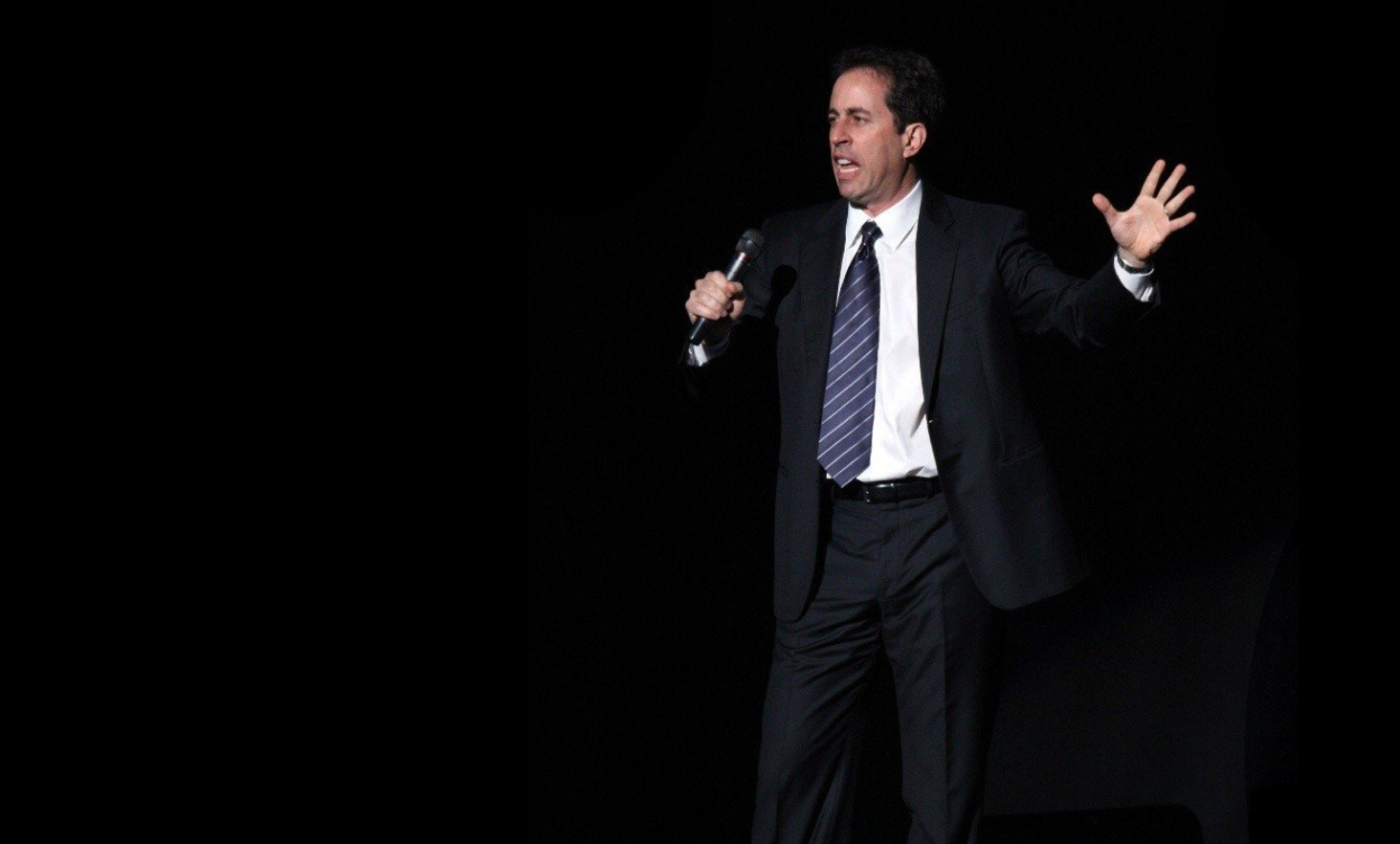
Such a description of the lecture is far closer to what the average classical educator is doing on a day-by-day basis than is the “unidrectional mode of transmission” detractors commonly cite. As I have written in other articles, most lectures delivered by classical educators are far closer to standup comedy routines than speeches.
The comedian gauges the audience by observing slight alterations in human faces. He must clock the mood of the audience, measure the volume of responses to certain stories, wager how far the audience is willing to go on dicey subjects, and determine if they are clued in to subtle cues which set up jokes later in the set. So, too, a good teacher is a student of human faces. The good teacher must learn the art of interpreting a darting glance, a vacant stare, fidgeting fingers and all the thousands of ways in which guilt, shame, hope, and intrigue are microscopically communicated through nearly invisible changes in the mouth and eyes. Like the comedian, the teacher must be able to measure and remeasure the mood of a room on a minute-by-minute basis. He must know when he is losing the class, and what kinds of gestures are apt to win them back. So much of what “the lecturer” says and does is determined by a kind of physiognomic dialogue that is subtly determined on the fly. It’s hardly one-sided. In most class lectures, the audience does a decent amount of talking.
All this to say, the average lecturer holds himself to a higher standard than the average discussion leader. The lecturer knows he can flounder and tank. Given our widespread belief in the inherent goodness of conversation (of “people just sitting down to talk,” said in a warm, affirming tone) the standards are much lower for discussion leaders. Administrators doing classroom observations will blithely, uncritically suggest teachers “have more discussion,” regardless of how effective a rhetorician the teacher is. Were the average administrator present to hear Martin Luther King, Jr. deliver his “I Have A Dream” speech to a class of sophomore civics students, it’s easy to imagine King being told to “ask more questions in the future.” It’s both comic and tragic to think of King’s speech being erased from history and replaced with the man asking, “So, what are some dreams you have?” and then sitting through a long and tedious litany of students talking about “becoming a video game designer for Christ” or “just, like, travel.”
I know, I know. “What are some dreams you have?” isn’t exactly what the flipped-classroom, active learning, “guide on the side” apologists have in mind, but it gets the students talking, so that’s good, right? I’m being facetious, but I’m also in earnest. Very little is said among classical educators about what constitutes “a pointless discussion.” We might, when pressed, admit that a discussion can be pointless, but it’s more a hypothetical concession than an actual concern. Instructions for leading “a good discussion” abound, but criteria for judging whether a twenty-minute discussion (about whether Frankenstein’s monster has a soul, say) was worthwhile are non-existent. On the other hand, lectures are pointless if they’re boring, most students are easily bored, and therefore it’s fair to assume most lectures are pointless.
A great discussion can be exhilarating and enlightening, but a great lecture (or a great speech) is capable of accomplishing something beyond the reach of a discussion: a great lecture can be transfixing. A great lecture can lead to the same kind of absorbed self-forgetfulness that a great story can offer. What is more, a great speech can be obeyed. For all the good discussions can accomplish, they don’t create duty — not unless the participants vote in the end.
Once more, my point here isn’t that lectures are good and discussion is bad. Rather, I believe classical educators have been giving class discussions a free pass to suck for far too long, all the while unfairly condemning lectures. I would also suggest that much of the affection for discussion that we find in classical schools is far more zeitgeisty and fashionable than we want to believe. In reading Alison King’s landmark, “From Sage on the Stage to Guide on the Side,” I was regularly impressed by just how many of her ideas have been carbon-copied into “classical pedagogy” presentations by visiting consultants and conference speakers.
Writing in 1993, King suggests the “guide on the side” model of active learning will be necessary “for the twenty-first century” because a time is coming when “individuals will be expected to think for themselves, pose and solve complex problems, and generally produce knowledge rather than reproduce it.” Given the rise of AI, and all the hapless apologists for AI working within academia, it’s hard to imagine any prediction about the future of learning being more wrong—and it’s hard to avoid the fact that we’ve been travelling on flipped classrooms all the way here.